As e-bikes have grown in popularity, so have their much faster lookalike. It’s causing problems.

E-biker Joel Pagliarulo lifts an e-bike motor Friday he will install on his Class 3 e-bike, left, that he maintains with a Class 2 e-bike, right, at his his home in Winslow. Pagliarulo said the Class 3 bike goes 28 mph while the Class 2 bike goes 20 mph. Pagliarulo does the maintenance and repairs on his e-bikes.
WATERVILLE — Joel Pagliarulo needs his electric bicycle.
Pagliarulo, 39, lives in Winslow and doesn’t have his driver’s license. Thanks to a foot injury from his time in the Army National Guard, most other modes of transport aren’t an option for him. Having an e-bike, a low-speed bike with a battery and a small motor, allows him to get around.
Pagliarulo is not alone.
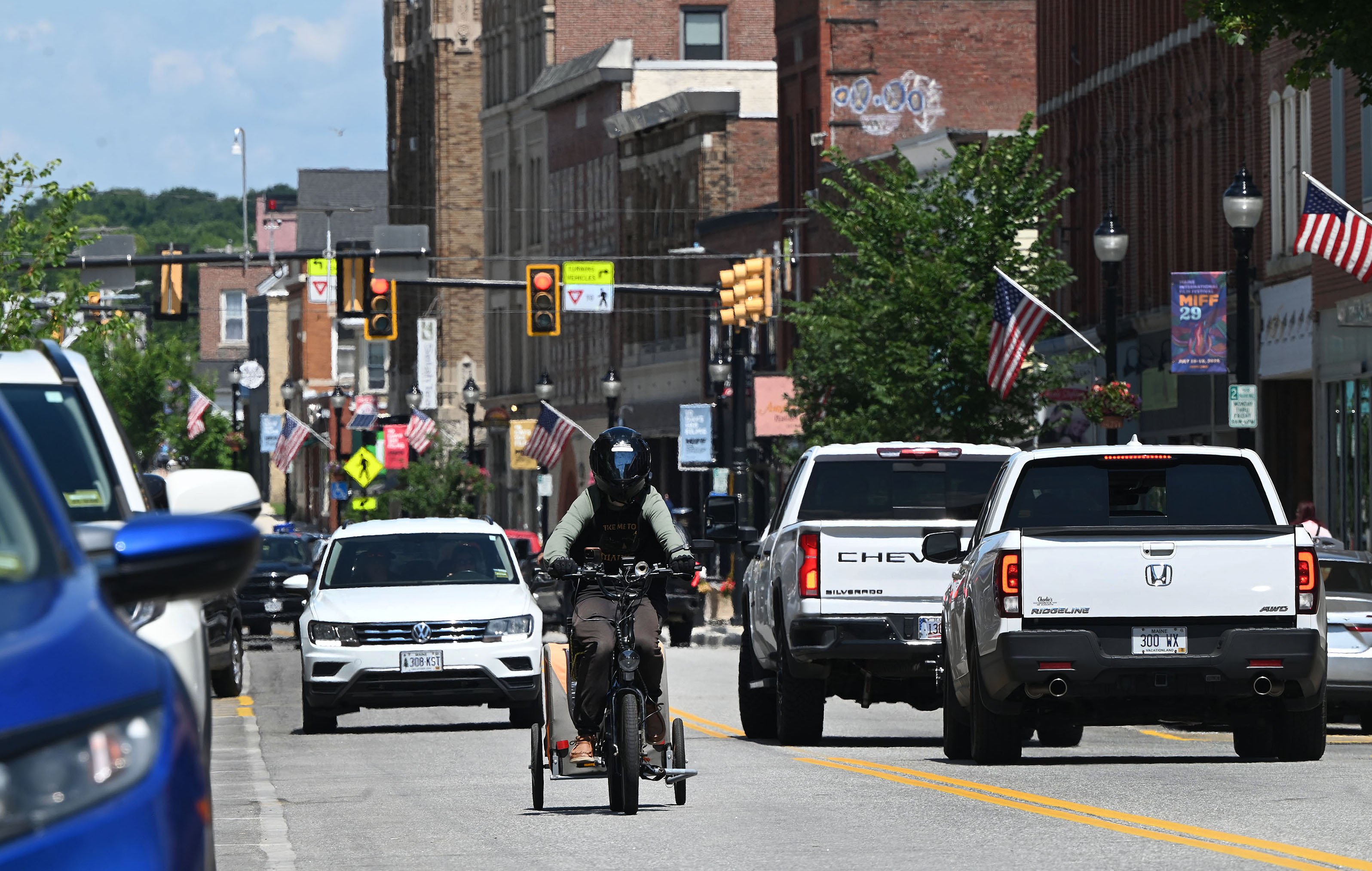
E-bikes started becoming popular around 2019 and, boosted by the COVID-19 pandemic, they became a popular option for commuters and people with mobility issues.
But in recent months, reports of e-bike crashes have increased across the country, with many involving children. One such crash occurred last week on Bangor Street in Augusta, where a 14-year-old riding an e-bike suffered serious leg injuries and was taken to MaineGeneral Medical Center.
Andrew Zarro, executive director of the Bicycle Coalition of Maine, said those raising alarm about e-bike crashes are misidentifying the issue.
E-bikes aren’t the problem, he said. Electric motorcycles are.
In the last year or so, the coalition, which supports the use of e-bikes, started hearing reports of even more e-bikes on the streets, going very fast. E-bikes can’t go above 28 mph, but e-motos can — some drive up to 65 mph.
E-motos are so new they don’t have a legal definition. They look a bit like e-bikes, though some have no pedals, but they function more like mopeds and motorcycles. And they’re unregulated. Zarro said they’re rapidly becoming popular, especially among young people, and for someone who doesn’t know the difference, they’re easily mistaken for e-bikes.
“It’s a very serious situation,” Pagliarulo said. “You wouldn’t go buy your kid a Harley. It’s no different.”
Zarro said the coalition knows e-bike crashes are inevitable, but he wants to make sure they’re accessible to people and as safe as possible.
“Success doesn’t actually mean zero e-bike crashes, because use is growing,” Zarro said. “That’s why it’s really important for us not to lump legal e-bikes and e-motos together in crash data. They’re very different — that would be like lumping moose crashes with bike crashes.”
E-bikes cost about $2,000 on average (and can be as cheap as $500). E-motos run between $700 and $3,599 on Amazon, where they’re easily bought.
Rave X Motorsports in South Portland also sells e-motos, and owner Dave Carlberg said they’re extremely popular. He said his customers are mostly parents who buy them for their children for $3,000 to $4,000.
Since 2021, the number of e-bike crashes in Maine has steadily increased, according to data from the Maine Department of Transportation. This trend has been mirrored nationwide. In 2025 there were 35 crashes in Maine, compared to just 10 in 2024, and 2026 is on track to be even worse.
This increase lines up closely with the advent of e-motos, and the state does not differentiate between e-bikes and e-motos in its crash data, said Andrew Gobeil, director of communications for the DOT.
So while e-bike crashes are increasing, Zarro said, e-motos are likely contributing to this data.
Carlberg said he markets e-motos as off-road dirt bikes, but he knows children have been taking them on roads in big groups. He gets multiple calls about e-motos a day, and people usually refer to them as e-bikes.
“There’s nothing wrong with these bikes, people have been selling dirt bikes for many years,” Carlberg said. “You can’t really rip them down the middle of the street.”
Carlberg believes dirt bikes can be safe and fun for children, and thinks its important they have a way to have fun outside. But he thinks people need to be aware of proper safety protocols — like wearing a full-face helmet — and traffic laws.
“I’d rather not get a sale than have a kid anticipate he can drive this down the middle of the road during rush hour traffic,” Carlberg said. “I don’t think we need to ban them, I just think we need to educate people.”
Matt Roy owns EBike 603 in Rochester, New Hampshire. He sells fat tire e-bikes and scooters, but he expects e-motos will cause him “a bunch of trouble” soon.
“At 50 mph, a 14- or a 12-year-old shouldn’t be riding it down Main Street,” Roy said. “It’s not legal and a kid’s going to get killed out there … it seems like the wild west a little bit.”
Advertisement
Roy said he sees children popping wheelies on e-motos on the streets, but rarely sees traffic enforcement for bikers.
Roy suspects most people are buying their e-motos online, and plenty are also hacking and modifying their e-bikes to make them go faster, which is illegal.
With so little regulation of e-bikes and e-motos, Roy said its only a matter of time before laws come crashing down. Roy is disabled, and started using his e-bike for hunting after a knee replacement. He hopes sensible regulation comes soon, before a “knee jerk reaction” to an e-moto tragedy hurts e-bike access for the people who need them.
WHAT STATE LAW SAYS ABOUT E-BIKES
In 2019, Maine was one of many states to classify e-bikes into three categories.
In Class 1 bikes, the motor only kicks in when the pedals are turning, and the top speed is 20 mph. These are useable pretty much anywhere a normal bike is.
Class 2 bikes also have pedal assist, but they come with a throttle on the handlebars, which is a control that lets the motor run even if the pedals aren’t turning. They also go up to 20 mph, and work where most bikes do.
On Class 3 bikes the motor provides assistance only while the rider is pedaling and stops assisting once the bike reaches 28 mph. These bikes are legal only on roads and paths where the authority that manages the area has authorized them.
Pagliarulo rides a Class 2 and a Class 3 bike, and he relies on them for all of his transportation needs.
In Maine, children younger than 16 can only ride Class 1 bikes, unless they’re a passenger on a Class 2 or 3 bike that can accommodate multiple riders.
Pagliarulo said he sees children riding e-motos as well as Class 2 and 3 bikes around Waterville, and he worries for their safety. E-motos are easy to pop wheelies on, which he said is fun for children and terrifying for everyone else.
“That’s where you see people getting really upset and wanting to ban them,” Pagliarulo said. “Kids are extremely irresponsible with these things.”
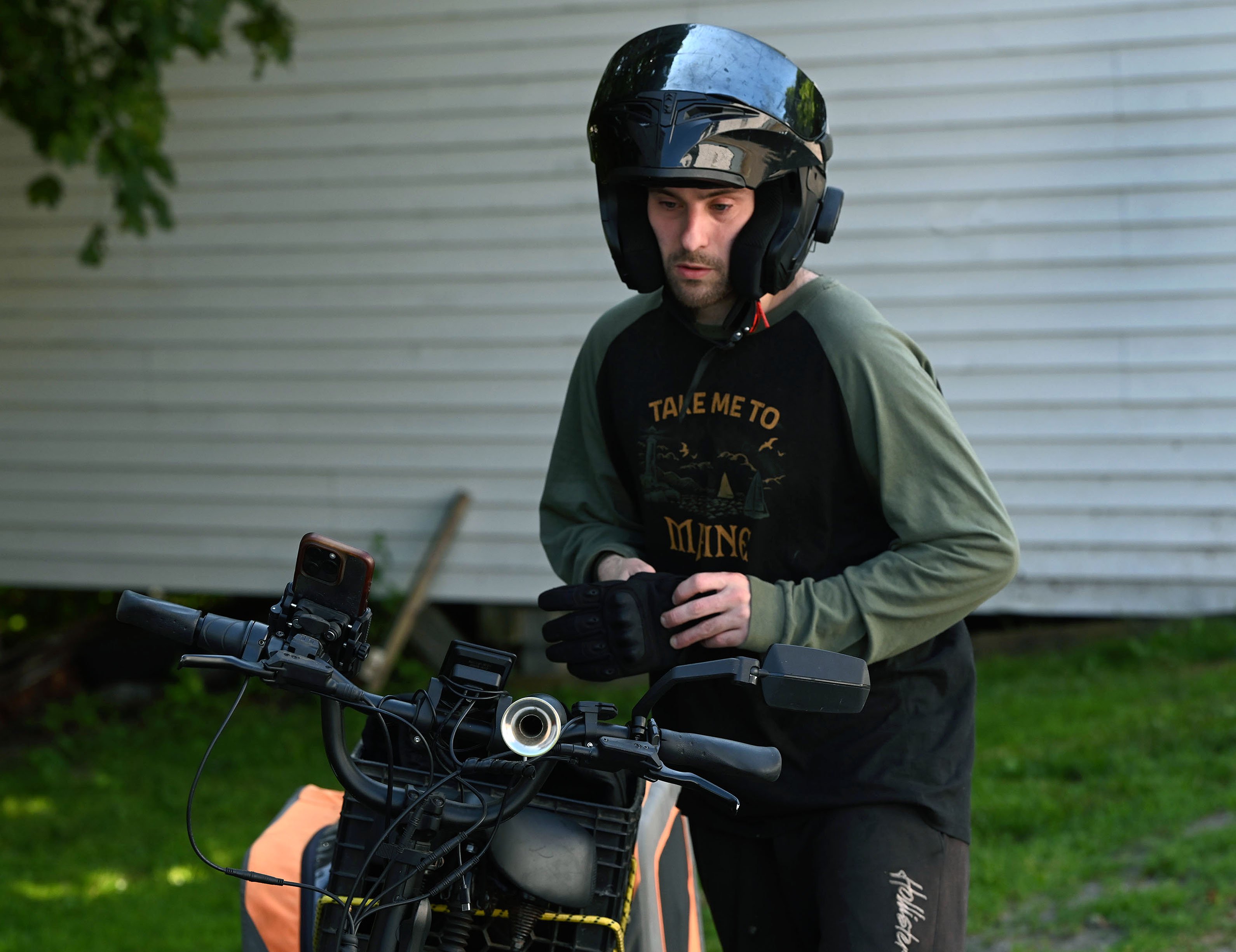
Pagliarulo has posted on Facebook warning parents and trying to educate them about e-bike laws. He’d love to bring a bike park to the area, and is hoping to grow a Facebook group for local riders. Like Zarro, he thinks education is important to making e-bikes more accessible.
Zarro said the coalition is not anti-e-moto, but is pro-clarity. “They do not have a place where you’re interacting with pedestrians,” Zarro said.
WHAT’S NEXT FOR E-MOTOS
The Bicycle Coalition of Maine already knows what its top legislative agenda item will be in 2027: identifying and regulating e-motos, protecting the existing e-bike law and making sure e-motos aren’t marketed as bikes.
In Massachusetts, the proposed Ride Safe Act would regulate e-bikes and mopeds on top of the state’s existing three class system, which is the same as Maine’s. Zarro and the coalition want to introduce that in Maine.
“Make sure (e-motos) are not defined as an e-bike and protect e-bike law as it exists,” Zarro said. “E-bikes are not the problem here. It’s just the education again of what people think are e-bikes because they look like them.”
Zarro said that while the coalition wants to see e-motos registered and regulated, it would not support a registration requirement for e-bikes under any circumstances.
Sen. Bradlee Farrin, R-Somerset, sits on the state’s transportation committee. His term ends this year, but he said that if it didn’t, regulating e-motos would be a top priority.
“It’s the safety piece,” Farrin said. “I think it can pose a hazard not only to the drivers, but to the other users of the road, and we just need to make sure that we’re keeping everybody safe.”
Farrin said that if e-motos can’t be classified as mopeds or motorcycles, he expects to see something from the Secretary of State’s office, providing guidance on whether registration or training would be required for e-motos.
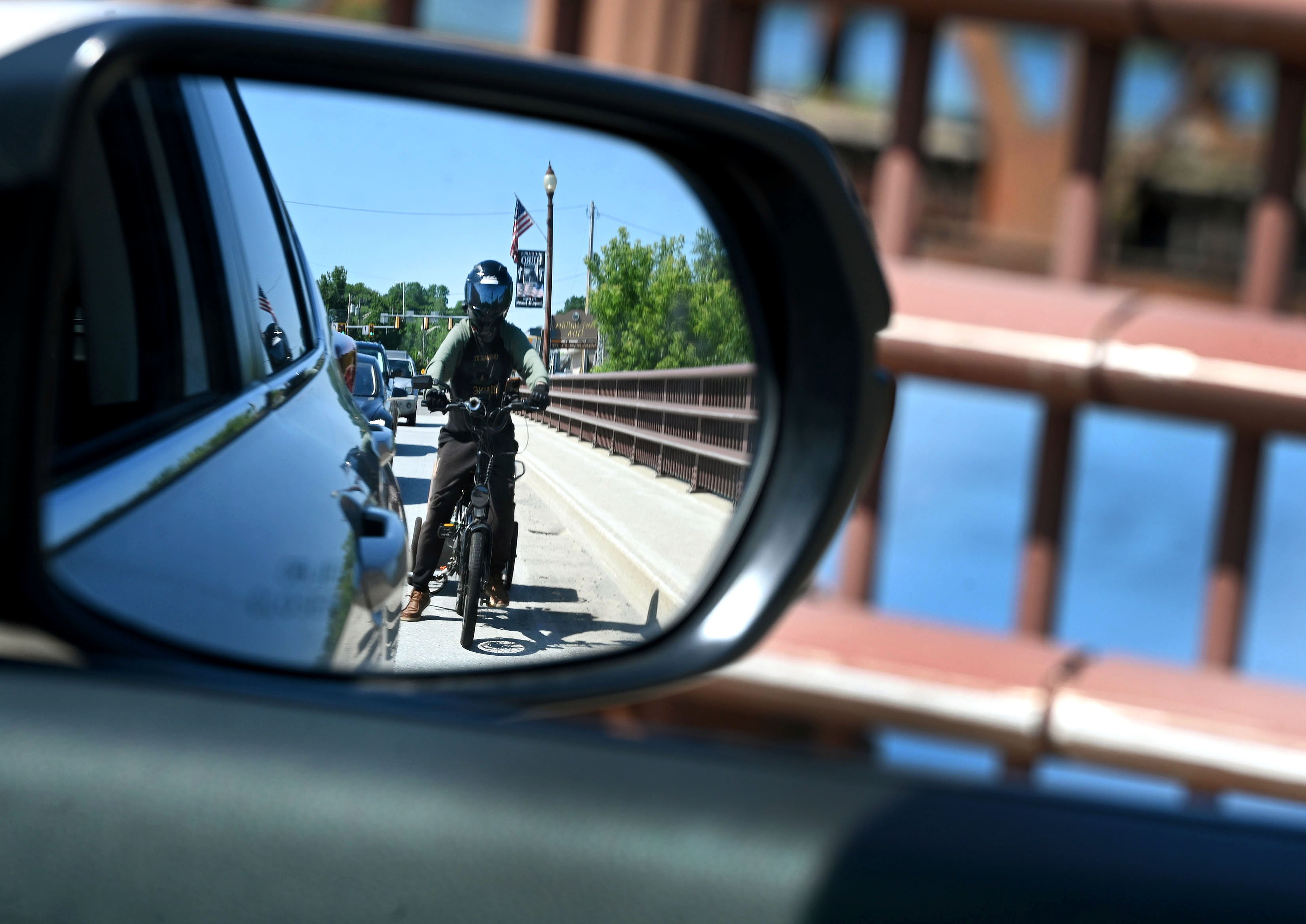
In the meantime, Pagliarulo will continue riding his e-bikes. He’s hoping to grow the central Maine e-bike community.
“A lot of people in Waterville are on foot,” Pagliarulo said. “I think there’s so many people who could benefit from having that mode of transportation.”
BIKING INFRASTRUCTURE IN CENTRAL MAINE
With good infrastructure and regulations, Zarro knows e-bikes can be a relatively safe form of transportation.
But in central Maine, roads are often marked by missing sidewalks, narrow shoulders, faded crossings and a lack of bike and pedestrian infrastructure, Zarro said. All of that is dangerous to bikers.
For Pagliarulo, safer roads would be life-changing.
Pagliarulo said he’s hyper-vigilant. He rides with a full-face helmet, has mirrors on his bike and uses a GPS to avoid busy roads where possible. He still feels he often comes too close to bad accidents, and sometimes fears for his life.
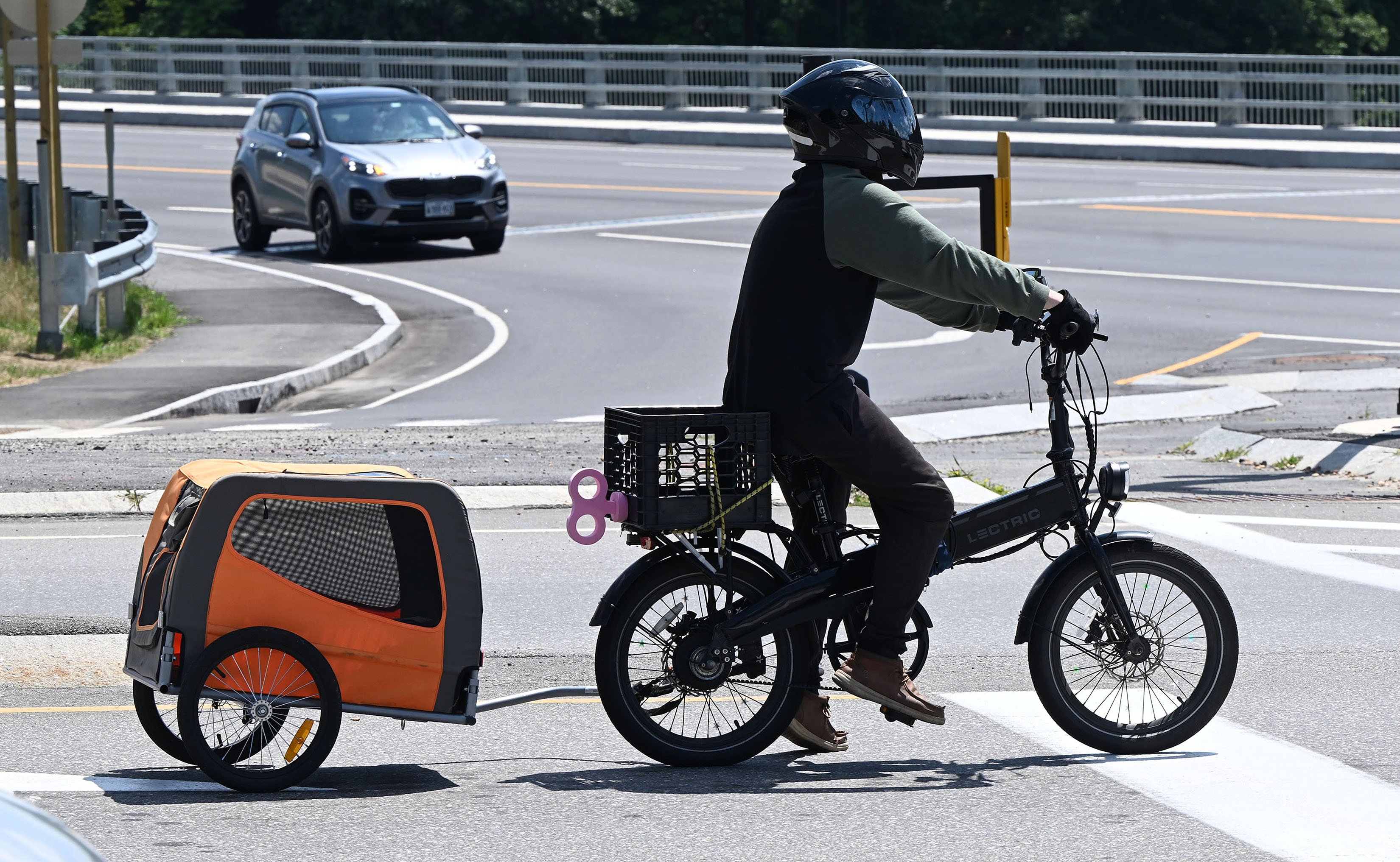
When Pagliarulo is biking on Kennedy Memorial Drive in Waterville, he knows he’s riding below the speed of traffic. Without a bike lane, that scares him, particularly on a right turn as drivers skirt too close to the curb.
2025 was Maine’s deadliest year for cyclists and pedestrians, and 2026 doesn’t look much better, Zarro said. He blames a lack of driving enforcement and a surge of distracted driving on roads that are designed for speed over safety.
That is why regulations and infrastructure improvements are a priority for Zarro, who is currently running for a seat representing Portland in District 115 in the state’s House of Representatives.
People like Pagliarulo hope regulations will protect their e-bikes, and keep them safer on the roads.